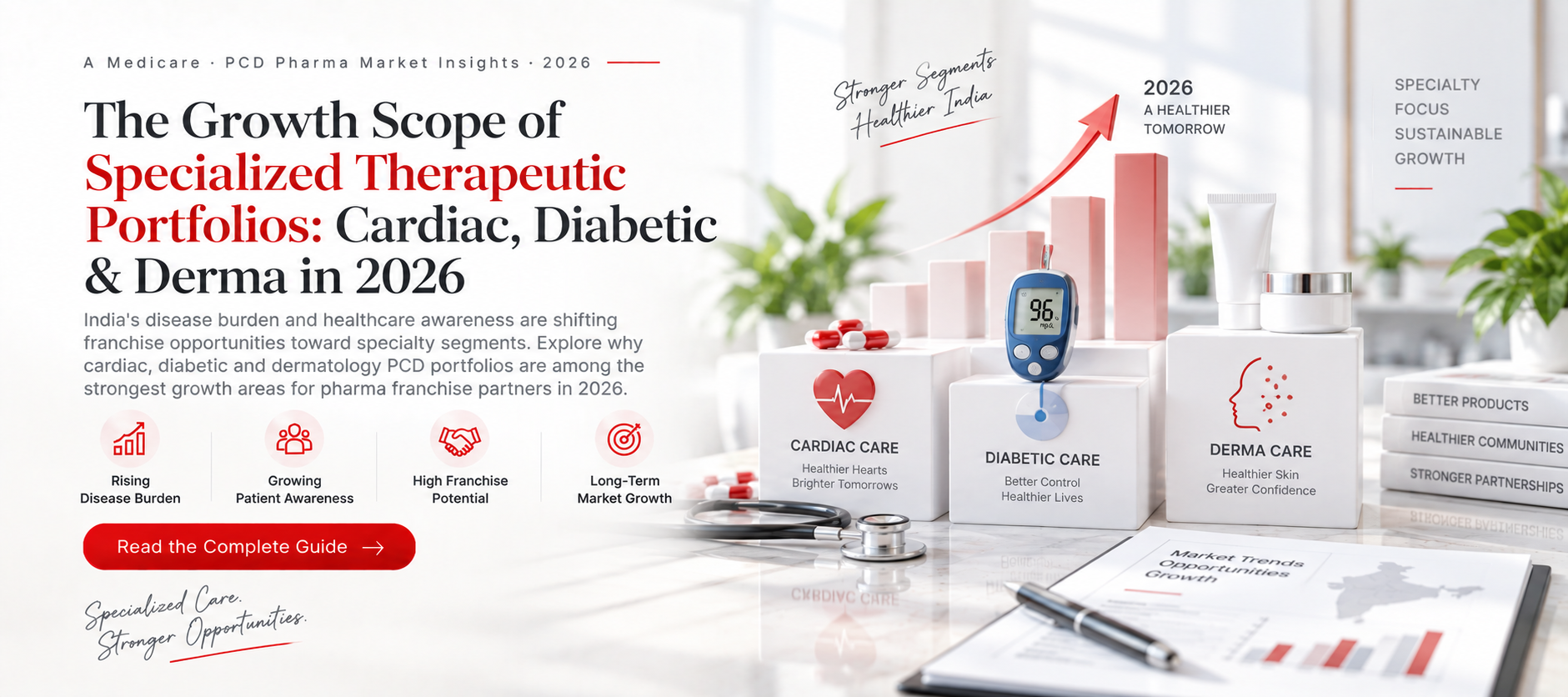
For many years, PCD pharma franchise partners built their business primarily on general and acute-care products. In 2026, the opportunity is increasingly moving toward specialized therapeutic portfolios—particularly cardiac, diabetic and dermatology ranges. These segments are driven by long-term treatment needs, rising lifestyle-related conditions and growing patient awareness.
Specialty portfolios offer a different kind of business potential compared to general products. Instead of relying only on seasonal or short-term demand, chronic-care and dermatology products can generate more predictable, recurring prescriptions. For franchise partners, this can mean stronger repeat orders, longer patient value and better long-term territory development.
1. Why Specialized Therapeutic Portfolios Matter in 2026
The Indian pharmaceutical market is influenced by changing lifestyles, urbanisation, dietary patterns, an ageing population and increased health screening. These factors have contributed to a rising number of patients managing long-term conditions such as heart disease, high blood pressure, diabetes and various skin conditions.
For a PCD pharma franchise partner, this shift creates a meaningful opportunity. Chronic-care and dermatology patients typically require ongoing treatment, which supports repeat prescriptions and stable monthly demand when the products are available and doctor-backed.
| Portfolio Type | Demand Pattern | Business Impact for Partner |
|---|---|---|
| General / Acute Care | Short-term treatment, often seasonal. | Faster movement but can fluctuate with seasons and competition. |
| Cardiac Range | Long-term therapy for chronic heart and blood-pressure conditions. | Recurring monthly demand when compliance and availability are maintained. |
| Diabetic Range | Continuous, long-duration treatment. | Strong repeat-order potential and predictable patient value. |
| Dermatology Range | Prescription and cosmetic-driven skin and hair treatments. | Brand loyalty, value-added products and steady specialist demand. |
2. Cardiac Portfolio: Steady Demand from Chronic Heart Care
Cardiovascular conditions—including hypertension, high cholesterol and heart disease—remain among the most significant health challenges in India. These conditions typically require long-term medication, regular monitoring and consistent patient compliance.
Why the cardiac segment is attractive for franchise partners
- Recurring prescriptions: Patients often continue therapy for years, supporting predictable monthly demand.
- Physician-driven demand: Cardiologists, physicians and general practitioners regularly prescribe cardiac medicines.
- Wide molecule range: The cardiac category includes anti-hypertensives, lipid-lowering agents, antiplatelets and combination therapies.
- Long-term territory value: A loyal base of prescribing doctors can generate compounding demand over time.
Common cardiac product categories
A cardiac PCD portfolio may include antihypertensive tablets, cholesterol-management products, antiplatelet therapies, cardiac combination formulations and supportive nutraceuticals. The exact range should match the specialists and physicians accessible in your territory.
3. Diabetic Portfolio: A High-Growth Chronic-Care Segment
India has a large and growing population managing diabetes and related metabolic conditions. Because diabetes is a lifelong condition, treatment continuity is essential, making anti-diabetic products one of the most consistent chronic-care segments for PCD franchise partners.
Diabetic patients typically require ongoing medication, supporting steady, repeat monthly demand for well-managed portfolios.
The category includes oral anti-diabetic tablets, combination therapies and supportive supplements, allowing portfolio flexibility.
Diabetologists, physicians and general practitioners frequently prescribe anti-diabetic products across many territories.
Diabetic care often pairs with cardiac, nutritional and neuropathy-support products, enabling a wider therapeutic offering.
Because cardiac and diabetic conditions often occur together, a combined cardiac-diabetic (cardio-diabetic) portfolio can be especially powerful. Many patients require both categories, and doctors treating one condition frequently prescribe for the other, creating natural cross-demand within the same territory.
4. Dermatology Portfolio: Brand-Driven, Value-Added Growth
Dermatology is one of the fastest-evolving therapeutic segments, supported by rising awareness of skin health, hair care, cosmetic treatments and lifestyle-related skin conditions. Unlike some purely prescription-based categories, dermatology combines medical treatment with strong brand and aesthetic appeal.
Why dermatology offers strong potential
- Consistent demand: Skin and hair conditions occur across all age groups and seasons.
- Brand loyalty: Patients often continue with specific brands once results are visible.
- Value-added products: Creams, serums, sunscreens, moisturisers and specialised formulations can support attractive positioning.
- Specialist and OTC-style demand: Products can be supported by dermatologists as well as broader retail demand where appropriate.
Common dermatology product categories
A dermatology PCD portfolio may include anti-fungal creams, acne-care products, moisturisers, sunscreens, anti-pigmentation formulations, hair-care solutions and medicated topical products. Packaging quality and product presentation are particularly important in this segment.
5. Cardiac vs Diabetic vs Dermatology: A Quick Comparison
Each specialty segment has distinct characteristics. Understanding these differences helps you choose the right mix for your market, doctor access and investment capacity.
| Factor | Cardiac | Diabetic | Dermatology |
|---|---|---|---|
| Demand Type | Chronic, long-term | Chronic, lifelong | Ongoing + cosmetic |
| Repeat Orders | High | Very high | Moderate to high |
| Key Prescribers | Cardiologists, physicians | Diabetologists, physicians | Dermatologists, skin clinics |
| Brand Sensitivity | Moderate | Moderate | High |
| Best Suited For | Physician-rich territories | Broad urban & semi-urban markets | Urban markets with skin clinics |
To align these segments with your specific market, read our detailed guide on choosing the best PCD pharma product portfolio for your region.
6. Key Demand Drivers Supporting Specialty Growth in 2026
Several long-term factors are contributing to the rising demand for specialty therapeutic portfolios in India:
7. Profitability Potential of Specialty Portfolios
Specialty portfolios often offer attractive value per prescription, especially in chronic-care segments where patients continue therapy over long periods. However, profitability depends on more than product margin. It is shaped by sales velocity, doctor access, competition, pricing and inventory management.
For example, a cardiac or diabetic patient on long-term therapy can generate value every month for years, which supports strong lifetime patient value. Dermatology products can add higher-value single purchases and brand-driven repeat demand.
To understand true contribution after operating costs, review our detailed guide on average profit margins in a PCD pharma franchise.
8. Challenges to Consider Before Choosing Specialty Portfolios
While the growth scope is strong, specialty segments also come with specific considerations. Understanding these challenges helps you plan more effectively.
Cardiac, diabetic and dermatology products depend heavily on the right prescribers. Ensure your territory has enough relevant doctors before investing.
Popular chronic-care molecules often have many competing brands. A strong doctor-connect strategy and consistent supply are important to compete effectively.
Specialty products—especially dermatology—require good quality, packaging and presentation to build patient trust and repeat demand.
Slow-moving specialty items can create expiry risk. Order based on validated demand and manage stock using FEFO principles.
9. How to Build a Specialty PCD Portfolio the Right Way
Entering specialty segments requires a focused approach. The following steps can help you build a strong specialty portfolio for 2026:
Map cardiologists, diabetologists, physicians and dermatologists in your territory before selecting a specialty range.
Begin with a core set of high-demand specialty products rather than a large, unvalidated catalogue.
Chronic-care patients need continuity. Partner with a company that can maintain consistent product availability.
Use scientific detailing, samples and consistent follow-up to build long-term prescription loyalty.
For field execution, explore our guide on how to market and promote pharma products to local doctors effectively.
10. Why Partner with Mensa Medicare for Specialty PCD Portfolios
Choosing the right partner is critical when entering specialty segments, where product quality, availability and doctor trust directly influence long-term success. Mensa Medicare works with PCD pharma franchise enquiries across multiple therapeutic areas, including cardiac, diabetic, dermatology and general ranges.
When evaluating a specialty PCD opportunity with Mensa Medicare, prospective partners can request:
- An updated product catalogue covering cardiac, diabetic, dermatology and other therapeutic ranges with composition and packing details.
- Current monopoly territory availability for your state, district or city.
- Applicable PCD pricing and commercial terms for your selected product segments.
- Information on quality standards, packaging and product presentation that support patient trust.
- Guidance on documentation and onboarding before starting your franchise.
- Support information on promotional materials to help build doctor engagement in your market.
11. Specialty PCD Portfolio Checklist for 2026
Before entering cardiac, diabetic or dermatology segments, confirm the following:
Explore Cardiac, Diabetic & Derma PCD Opportunities with Mensa Medicare
Share your target state and district to request the specialty product catalogue, current territory availability and commercial terms from the Mensa Medicare team.
Specialty PCD Pharma Portfolio FAQs
Cardiac and diabetic products are chronic-care therapies used for long durations. Rising cases of hypertension, cardiovascular disease and diabetes, along with an ageing population and increasing health awareness, contribute to steady, recurring demand for these categories in India.
Dermatology products can be attractive because of consistent demand for skin, hair and cosmetic-related treatments, brand-driven prescriptions and value-added products. Actual profitability depends on product selection, doctor access, pricing, competition and inventory management.
Chronic-care products such as cardiac and diabetic medicines can create recurring demand due to long-term treatment, while acute products provide faster short-term movement. A balanced portfolio of both is often more stable than depending on a single category.
Cardiac and diabetic products are commonly linked to cardiologists, diabetologists, physicians and general practitioners, while dermatology products are prescribed by dermatologists and skin clinics. Some products also see support from general practitioners depending on the market.
Mensa Medicare works with PCD pharma franchise enquiries across multiple therapeutic segments. Prospective partners can contact the team to request the product catalogue, current territory availability and commercial terms for cardiac, diabetic, dermatology and other ranges.